


Start typing and press enter to search
Start typing and press enter to search


WHAT ANCIENT ROMAN BATHS CAN TEACH US ABOUT MODERN BUSINESS ANALYSIS
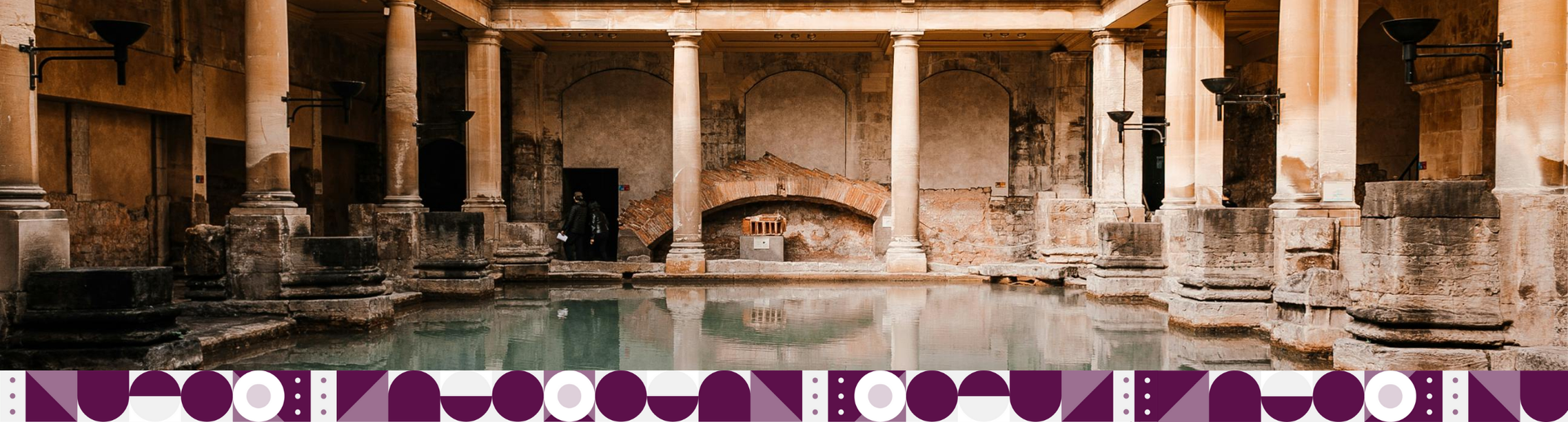
When walking through the Roman baths in Bath, UK, you’re not just stepping into a heritage site, you’re stepping into one of history’s earliest designed environments for strategic thinking, relationship-building, and collective problem-solving.
The baths were places where people met with clients to discuss business, debate the issues of the day, listen to philosophers, play games, eat, drink, and rejuvenate. They were deliberately social, intellectually lively, and unusually human-centred for their time.
What made the baths so effective wasn’t the water. It was the context. The Romans understood something we often forget; people think better when the environment supports them. They listen more openly when they feel at ease. They collaborate more naturally when conversation doesn’t feel forced.
The baths were built to encourage exactly that dynamic: alcoves for private dialogue, shared spaces for open discussion, and a rhythm that let people move between business, ideas, and restoration.
Modern workplaces are full of speed, noise, and fragmentation - all conditions that have the potential to restrict clarity. Teams often don’t lack data or frameworks; they lack environments where people can actually talk honestly about what’s going on, what they need, and what they’re trying to build.
That’s where thoughtful business analysis becomes a differentiator. It isn't solely a discipline - it’s a context-setting craft.
At Redvespa, this idea sits at the centre of how we work with clients. Yes, we bring technique, structure, and analytical discipline. But that’s not the magic. The real impact comes from creating the conditions where the right conversations can happen; openly, safely, pragmatically. Where people can surface assumptions, debate options, challenge each other constructively, and feel energised by the process rather than drained by it.
As AI takes on more of the mechanical work - analysis, synthesis, modelling - the distinctive value of human analysts will increasingly come from:
The Romans knew this instinctively. Their baths weren’t a luxury - they were an infrastructure for better decisions. Not hot springs or marble columns, but intentional environments where clarity, curiosity, disagreement, and collaboration coexist naturally. Where teams can restore their collective thinking.
This is the consulting relationship we build with our clients: a space that feels human, energising, and genuinely useful. The 21st-century equivalent of those alcoves around the baths where the real conversations happened.
Sarah Gibson is Redvespa's empathic, human-centred CEO and a natural explorer who thrives on curiosity, creativity, and unleashing potential in the people around her.
Link copied to clipboard


