


Start typing and press enter to search
Start typing and press enter to search


Jamie is Redvespa's Head of Experience. In spite of this article, he's pretty strong in his conviction that Spiderman is the best superhero.
Bruce Wayne is the archetype of the phrase, “money doesn’t buy you happiness.” His parents are the origin of both his wealth and his despair. Together, they define his alter ego: Batman - the very epitome of brooding, lone-bat bleakness.
Batman debuted in 1939, but we can trace his story - or his type of story - much further back. The Caped Crusader is intrinsically aligned with the Hero’s Journey. That framework tracks all the way to Homer’s epic, the Odyssey, which dates from around the 8th century BC. The Odyssey is recognised as history’s most enduring narrative; not really surprising given it’s receiving the Matt Damon film treatment in 2026.
In spite of its longevity and success, this story format is where business storytelling often goes wrong - falling into a Hero’s Journey trap. We want to be the protagonist who saved the day; armed with research, models, and analysis in our utility belts.
The risk here is, when you position yourself as the hero, your stakeholders become passive observers of your journey rather than active participants in their own.
The Odyssey and Batman both highlight ways to tell a hero’s story, without needing to be both narrator and hero.
Odysseus shows us the power of who tells the story.
His epic journey is largely narrated by someone else. Of the 24 chapters that make up Homer’s epic, Odysseus only narrates four of them. There’s no humble brag here, just adventure and heroism on a scale worth recounting.
Batman shows us the power of who supports the story.
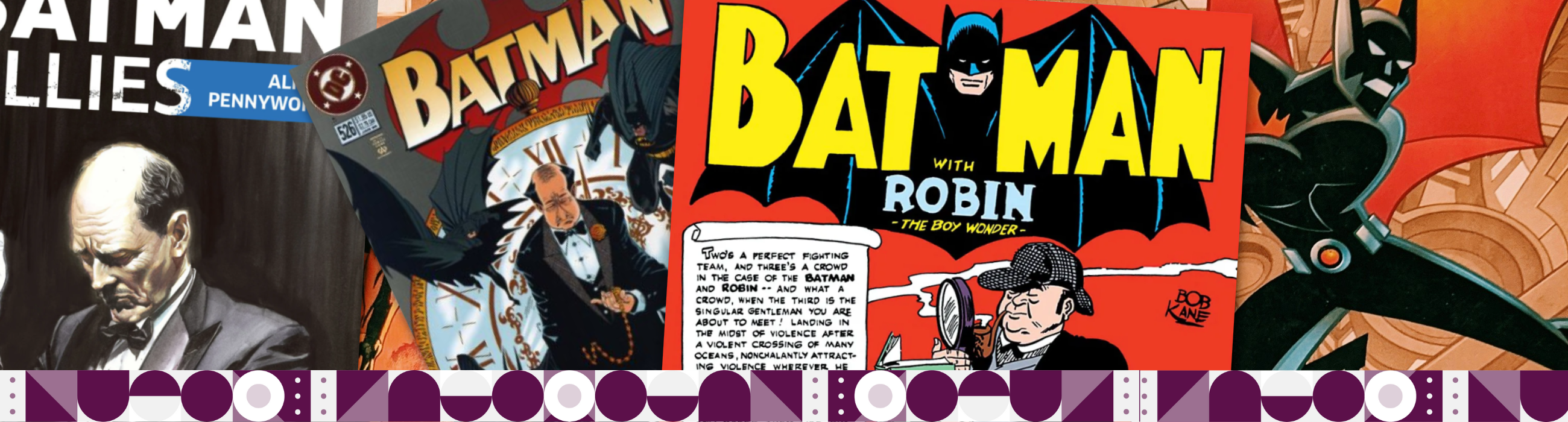
The Dark Knight’s story is defined by bravery, disregard for personal safety, a double life, and gadgets. None of these exist in isolation. They are only possible because he has an ally who anticipates his needs, prepares for the task at hand, and intervenes when needed with technology, strategy, and subject matter expertise. He has Alfred.

Michael Caine, who portrayed Alfred in The Dark Knight trilogy, referred to Alfred as “Batman’s Batman”; the actual hero behind the scenes who makes the public-facing hero look good and, importantly, ensures they succeed.
Alfred doesn't interrupt Batman's mission to explain how hard he worked on the Batmobile; he simply ensures the Batmobile works when it’s needed.
Alfred doesn't hand Batman every tool all at once; he anticipates the challenges Batman will face and provides the right tools for each mission.
When you’re on the ground - working in projects and effecting change - these are the roles you play; doing the mahi to ensure the thing that’s needed is there when it’s needed.
This is the Alfred Effect.
It might not be a Batmobile or a Batarang, but you do have a specific set of skills, applied in a certain way, which enable project stakeholders to look like heroes.
When it comes to telling the stories of our projects - especially when our job is to shape change and give projects momentum - we can put the Alfred Effect to work by adopting an approach which leans on our role as support (as Alfred) and narrates from that perspective (like the Odyssey).
We don’t want to fall into the trap of a passive Hero’s Journey, but that doesn’t mean abandoning the structure altogether. Used selectively, it’s a powerful way to implement the Alfred Effect.
The traditional Hero’s Journey maps a long arc: the Ordinary World, the Call to Adventure, the Threshold, Tests, Ordeals, Enemies, Reward, Resurrection. It’s twelve stages in its most common form, sometimes closer to seventeen. It’s a structure built for epic poems and feature films. If you’ve got 24 chapters, you can afford the journey. If you’ve got key stakeholders in the room, you might be lucky to have 24 seconds.
.jpg)
That constraint forces a choice. Rather than trying to tell the whole journey, and accidentally cast ourselves as the hero, the Alfred Effect focuses on the moment where the story actually moves: the Threshold.
For project stories, this is where the value lies. The hero is standing on the edge of the known, preparing to step into the unknown. By moving into a Mentor’s mindset, you shift the narrative focus from what you did to how you enabled the hero to cross that threshold. In the classical structure, the Mentor is the catalyst - the one who provides the strategy and tools needed to cross the threshold and survive the unknown.
The Hero’s Journey features a core concept of the Ordinary World and the Special World. For Odysseus, these worlds constituted his home in Ithaca and his adventures throughout the Mediterranean upon leaving. In Gotham City, the Ordinary World is Bruce Wayne in the day; Batman inhabits the Special World in the night. The major difference between these worlds isn’t as murky as choppy waters or shaded alleyways, though. It’s the known vs. the unknown.
Every project follows a similar journey: from the "known" of BAU to the "unknown" adventure of every new project and initiative. From our experience, we know that key project staff - often BAs - act as the holder or finder of the knowledge that exists in the known world, and they know how to apply this knowledge in support of the hero’s adventure into the unknown. In the Hero’s Journey format, they’re the Mentor.
The Position Description for the Mentor is pretty much the same as the PD for the role of butler at Wayne Mansion. When you’re applying the Alfred Effect here, there are some techniques you can apply to help move the hero/your stakeholder across the threshold.
The Utility Belt
Do the mahi first, figure out what your stakeholder is trying to achieve, what they’re already holding - fears, bias, what’s at stake, and what they’re going to need. Then you can ensure you’ve filled their utility belt with stories that ensure they think, feel, or do something different.
The Riddler’s a Bad Guy
Don't waste time on a long setup; the baddies are getting away. Start close to the end by addressing the clear reason stakeholders should care, right now. Getting to the detail shouldn’t mean untangling a riddle.

Cut to the BOOM
If you take people on a ride, there must be a payoff worth the journey. Adam West’s Batman got to the “BOOM” and “POW” in 25 minutes; Heath Ledger’s Joker needed two and a half hours of madness. If the point you’re making is small, keep the story small; save the epic for the conclusion of the saga … and there’s never an excuse for a 263-minute Return of the King-style extended version.
At the end of Batman’s escapades, Alfred is the one waiting in the Batcave to help Bruce Wayne integrate his experiences back into Gotham. He ensures the wounds are healed and the new tools are ready for the next mission. He also records Batman’s stories in a number of places; updating the Batcomputer’s database, arranging and displaying mementoes in the Batcave, counselling Batman in the aftermath.
You’ll recognise the parallels in your own project work. In business, there’s always an eye on the future - applying your new initiative to BAU or ahead to the next project. Just as you guided your stakeholders into the project, you have a role to play as they emerge from it, keeping these perspectives in focus. That might be leading them through a structured retro, by building a case study, or in the creation of documentation that enables BAU implementation and ongoing improvement.
The Alfred Effect means you can get down the details and share the stories, celebrating the heroes you mentored to victory (or commemorating their spectacular fall) with some simple techniques.
The Utility Belt Audit
This one offers personal reflection as you look back at what you armed your stakeholder with at the start and explore what was useful, what was dead weight, and consider what you might pack for them next time. If they learned how to use some new tools, now’s the chance to get them to share - help empower Robin to be the sidekick.
Causation Over Chronology
Your stories are worth telling, so tell them in a way that’s worth reading. While most storytelling techniques lean on a chronological structure - including the Hero’s Journey - don’t fall into the "and then" trap. Instead of a timeline of events, tell the story emphasising the unexpected; the causes of your pivots, the major progressions or regressions, and the ultimate result of action.
“We selected a vendor based on their high-performance promises, but their API failed to handle our real-world data volume. So, we engineered a custom bridge - a specific set of skills applied to save the team two hours of manual entry every morning, transforming their morning dread to a productive start.”
Straight to the Batcave
Even if a formal case study isn’t recorded, every moment is a story and you should record them. Alfred curates the Batcave’s physical and digital archives, and that’s your role too.
Here’s a tip which takes us from Hero’s Journeys to 1990s sitcoms: the show, Friends, used a unique naming convention for its episodes with each title starting with “The One With/Where…” For example, “The One Where Ross and Rachel Take a Break.”
It’s a simple technique to capture the key point of your story as succinctly as possible, ie. "The One Where We Saved the Team Two Hours a Day".

Ultimately, the Alfred Effect is about building a legacy that outlasts the project lifecycle. By moving from a Hero’s Journey to a mentor mindset, you ensure the stories you tell set your projects up for success, whether that’s the one right in front of you or another one further down the road.
There’s a popular quote,
"Always be yourself, unless you can be Batman.
Then always be Batman."
However, the moral of this story is
"Always be Alfred.
Because you’re already Alfred."
Header image: adapted from Dev on Unsplash
Link copied to clipboard


